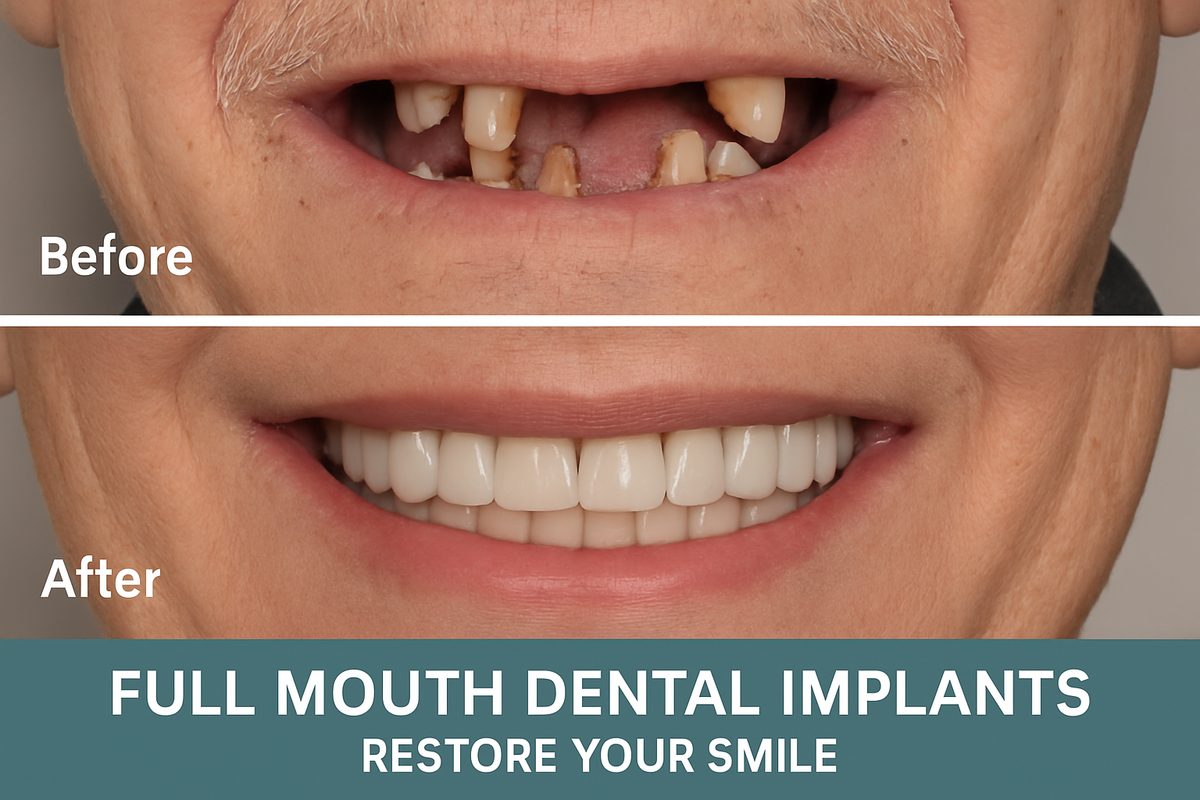
If you’ve searched for what are full mouth dental implants, this guide explains the basics in plain language. Full mouth dental implants replace all upper or lower teeth using dental implants plus a prosthetic arch. They aim to restore chewing, speaking, and facial support with teeth that feel and function much like natural ones. This post covers how they work, common options, who’s a good candidate, what to expect, benefits and risks, costs, and next steps so you can decide whether to book a consultation.
How Full Mouth Dental Implants Work
Full-arch implant care uses titanium posts (implants) placed into the jawbone. Each implant gets an abutment that connects the implant to a prosthetic arch (fixed or removable). The prosthetic arch replaces all the teeth in an arch and is anchored to the implants. Over time the bone fuses to implants (osseointegration), giving stable support that mimics natural tooth roots.
Common Types of Full-Arch Solutions
All-on-4 / All-on-X
All-on-4/All-on-X uses strategically angled and straight implants to support a full fixed arch with fewer implants. It often lets skilled teams place implants and attach a temporary arch the same day, speeding recovery and function.
Implant-supported bridge
An implant-supported bridge uses several implants to hold a continuous fixed bridge. It’s very stable and looks like a natural set of teeth, but may require more implants and precise planning.
Implant-retained overdenture
An implant-retained overdenture snaps onto implants and is removable for cleaning. It’s usually less expensive, easier to maintain, and provides better stability than traditional dentures.
Who Is a Good Candidate?
Good candidates want stable, long-term tooth replacement and have reasonable oral and overall health. Sufficient bone volume and healthy gums help, but bone grafting can rebuild bone if needed. Conditions like uncontrolled diabetes, heavy smoking, or severe untreated gum disease raise risks. Older age alone rarely blocks treatment if health and healing capacity are good.
What to Expect During Treatment
Consultation and 3D planning
Expect a thorough exam with 3D CT scans and digital impressions. These tools map bone, nerves, and sinus locations so the team can design implant positions and the prosthetic arch.
Surgery and healing
On surgery day implants are placed—sometimes with same-day temporary teeth (immediate loading) or a healing period before loading. Healing usually takes several months for bone to integrate.
Final restoration and follow-up
After healing, the final prosthesis is fabricated and adjusted for fit, function, and esthetics. Regular follow-ups keep implants and gums healthy.
Benefits and Risks
Major benefits
Full-mouth implants restore chewing, improve speech, preserve jawbone, and support facial structure. They’re more stable and feel more natural than removable dentures.
Potential risks and complications
Risks include infection, implant failure, need for grafting, and nerve or sinus issues in rare cases. Success rates are high with good planning and care.
Cost, Insurance, and Financing Basics
Costs vary by number of implants, grafting, materials, and lab work. Insurance may cover parts of care but often not full implant costs. Common patient financing options include CareCredit, Proceed, LendingClub, and other plans to spread payments.
Why Choose a Multidisciplinary Practice for Full Mouth Dental Implants
A team that does planning, surgery, and restorations in one location improves coordination and outcomes. MoArk Dental & Implants offers in-house 3D planning, an on-site lab, and Yomi® robotic guidance to enhance precision and shorten turnaround times while keeping care local.
Next Steps / Call to Action
If you’re ready to learn if full-arch implants suit you, schedule a consultation with 3D imaging. A personalized plan and financing review will clarify options and timing so you can take the next step toward a stable, natural-feeling smile.