Replacing missing teeth can feel overwhelming. This guide breaks down the best tooth replacement options so you can compare choices, pros and cons, and next steps. It’s for anyone weighing long-term solutions, short-term fixes, or a mix—whether you need one tooth or a whole arch. Read on to learn the common options, why dental implants are often recommended, when bridges or dentures make sense, and what questions to bring to your appointment.
Common tooth replacement choices
– Dental implants (single and full-arch): Titanium posts placed in bone to hold crowns or fixed bridges. – Implant-supported crowns/bridges: Crowns or bridges attached to implants for a fixed feel. – Fixed bridges: Non-removable restorations anchored to adjacent teeth without implants. – Removable partials: Metal or acrylic prosthetics that clip into the mouth to replace several teeth. – Full dentures: Removable prostheses that replace all teeth in an arch. – Resin-bonded (Maryland) bridges: Conservative bridges bonded to adjacent teeth with minimal tooth removal. – Temporary flippers: Low-cost acrylic teeth used as short-term solutions.
Why dental implants are often considered the best tooth replacement options?
Single-tooth implants
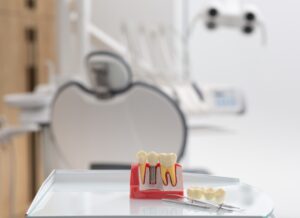
A single-tooth implant uses a titanium post in the jaw, an abutment, and a custom crown. This restores chewing power, preserves bone by transmitting forces to the jaw, and can last decades with good care. For many patients, implants feel and function closest to a natural tooth.
Implant-supported bridges and All-on-X
When multiple teeth or an entire arch are missing, implants can support bridges or a fixed All-on-X prosthesis. These solutions restore stability and bite force better than removable dentures and reduce the need for bulky clasps or adhesives.
Pros, cons, and candidacy
Implants offer durability, natural esthetics, and strong function, but require surgery, time to integrate, and higher upfront cost. Good candidates typically have adequate bone, controlled health conditions, and non-smoking status—or a willingness to follow specific care plans and possible bone grafting.
Fixed bridges: when they make sense
Fixed bridges are faster and avoid surgery: adjacent teeth are shaped to hold a bridge that spans a gap. They work well when nearby teeth already need crowns. Downsides include altering healthy teeth and less bone preservation at the extraction site. Lifespan varies but often lasts 10–15 years with proper care.
Removable options: partials and full dentures
Traditional partials and full dentures cost less up front and are non-surgical. Fit and comfort can vary; dentures may shift and reduce chewing efficiency. Implant-retained overdentures combine implants with removable prosthetics to improve stability, comfort, and bone support—often a strong middle ground for patients on a budget.
Conservative and temporary choices
Flippers, temporary bridges, and resin-bonded (Maryland) bridges are lower-cost, quick fixes for short-term needs or limited budgets. They restore appearance but have limited strength and longevity and are best as interim solutions or for low-load areas.
How to decide between the best tooth replacement options?
Consider oral and overall health, bone volume, budget, desired longevity, esthetic goals, and timeline. Start with a clinical exam and 3D imaging to assess bone and soft tissue. A coordinated treatment plan from a dental team—restorative dentist, surgeon, and lab technician—helps match the right option to your needs.
Questions to ask your dentist
Ask about expected lifespan, materials used, whether bone grafting is needed, recovery time, total cost and financing, who performs each step, and the lab workflow for your restorations.
About advanced care and what to expect from a modern implant practice
Modern implant care blends team-based planning with digital tools—3D scanners, guided surgery, CAD/CAM restorations, and in-house labs—to speed treatment and improve fit. Practices offering robotic-guided placement, same-location workflows, and custom milling can reduce appointments and improve predictable outcomes.
Schedule a consultation to review your 3D scans and get a personalized plan that identifies the best tooth replacement options in Thayer, MO for your situation. Many offices offer financing (CareCredit, Proceed, LendingClub, and others) to help spread costs. A tailored plan will clarify timing, cost, and the option that meets your health and esthetic goals.